

The Architecture
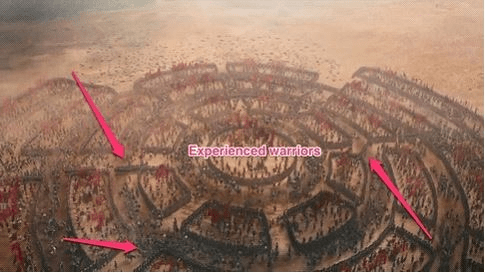
The Chakravyuha is a complex defensive formation characterized by multiple tiers, resembling a rotating disc when observed from above. Its primary objective was to capture and detain a specific target. Positioned within the formation, warriors faced increasingly complex challenges as they advanced deeper into its layers. Dronacharya, assuming the role of commander-in-chief after Bhishma’s defeat, employed this colossal formation during the battle of Kurukshetra. Regarded as one of the most brilliant military tactics ever devised, the Chakravyuha exemplifies strategic excellence.

The Chakravyuh is a dangerous formation that demands exceptional skills to survive. In this cruel formation, many warriors tend to forget the warfare principles. That’s why Abhimanyu is rightly remembered as a brave and tragic hero. He lost his life while attempting to breach the deadly Chakra-Vyuha.
What did the Chakra-Vyuha look like?
The Chakra-Vyuha had a complex structure, but the Classical 7-circuit labyrinth best represents it. This labyrinth provides a simplified depiction of the Chakra-Vyuha’s intricate design. There were eight possible forms of the Chakra-Vyuha.

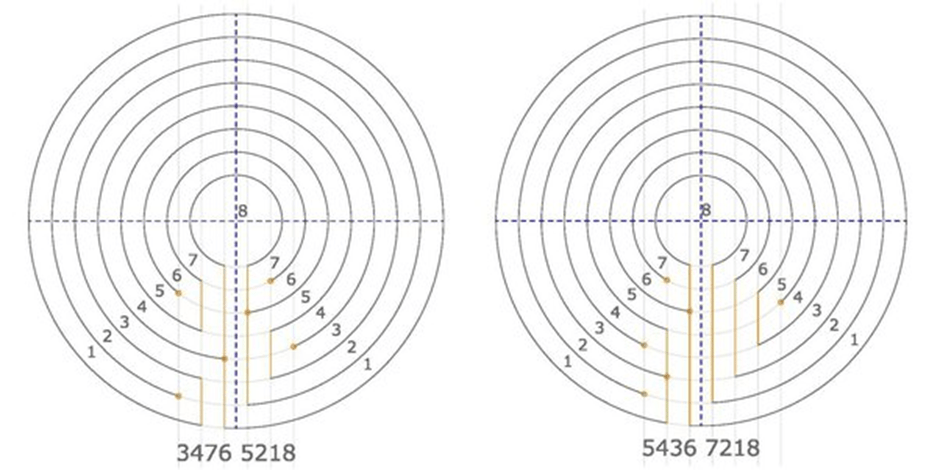


Please note that the Chakra-Vyuha formation cannot be seen from the ground due to its unique characteristics. Each layer of the maze is not just a single row of soldiers; it consists of a large battalion with tens or even hundreds of soldiers, creating depth. The layers are also uneven and contain various small traps spread throughout the formation. There is a wide path between two layers, allowing a battalion to pass through. From the ground, it would appear as a wide passage with enemy armies engaged in combat on either side. Only the inner row of soldiers faces the warrior or army attempting to navigate the maze, while the outer layer focuses on defending the next outer passage. The formation is not static; it rotates around its center, constantly changing its maze structure. It is important to understand that the Chakra-Vyuha is highly dynamic, with small details subject to sudden changes. The arrangement and direction of the rings continuously shift based on pre-determined signals and commands issued by the army commander through drums, conch shells, or other sounds.
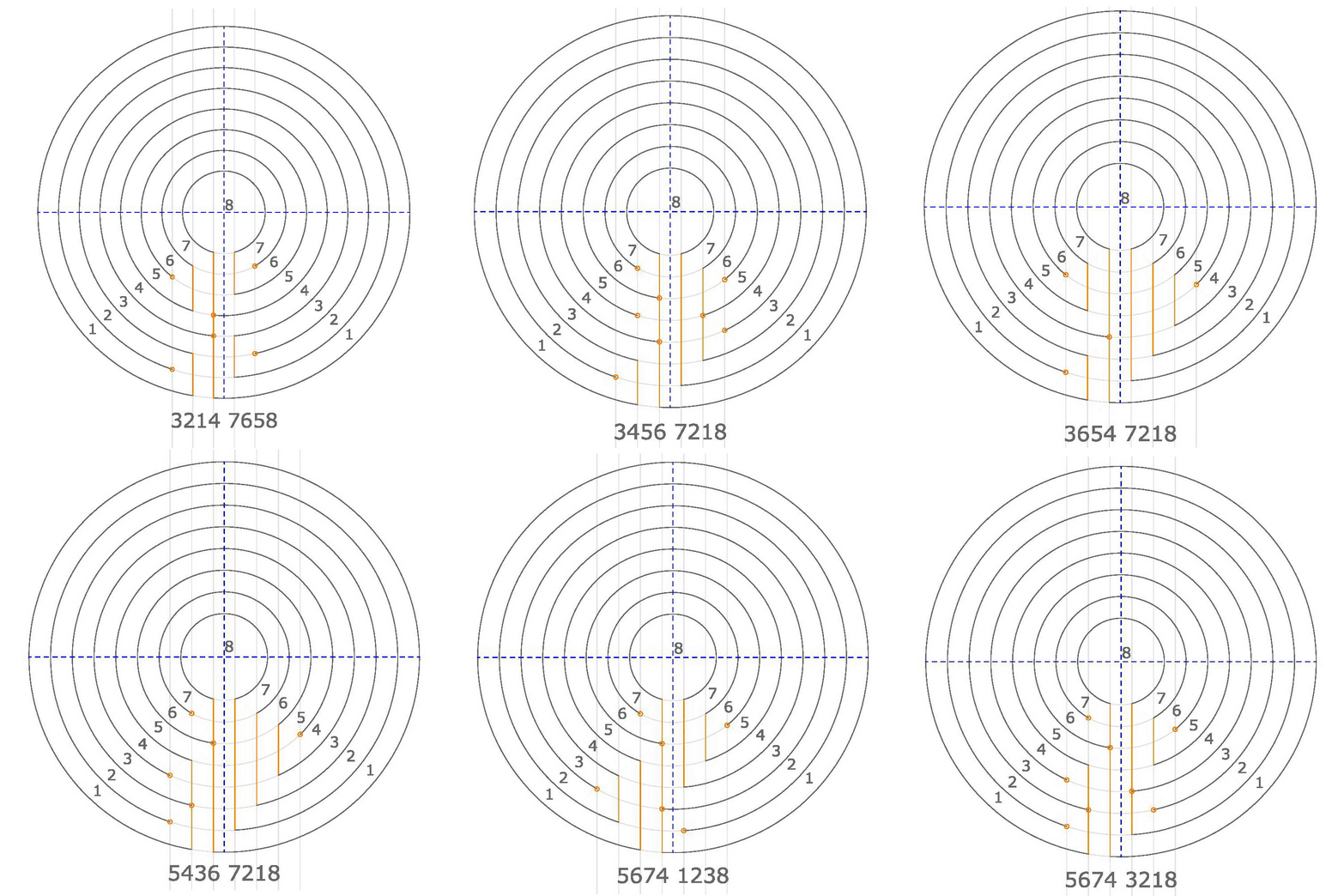
Drum beats signal the soldiers in the Chakra-Vyuha formation to move uniformly in a specific direction. If a soldier in the formation is killed, the surrounding soldiers slide into the vacant position until the space is filled. This technique ensures that the maze remains intact with evenly distributed soldiers.
To form a Chakra-Vyuha, a specific stationary or moving object or person is targeted for capture and surrounded to ensure complete security during military conflicts. The formation consists of two soldiers on each side, with other soldiers following at a distance of three hand lengths, forming seven circles that converge at the end where the captured object or person is placed. The commander identifies the soldiers who will form the formation based on the estimated resistance and determines the number of soldiers and the size of the Chakra-Vyuha. Once the formation is established, the foremost soldiers position themselves on either side of the target, briefly engaging with it before moving forward. The following soldiers on each side then take their place, repeating the process. This continues as several soldiers pass the target, moving in a circular pattern. By the time the last soldiers arrive, the target is unknowingly captured by the six or seven tiers of soldiers surrounding it from all sides. The last soldiers give a signal to signify the completion of the Chakra-Vyuha. Upon the signal, all soldiers facing outward turn inward to face the target, revealing its captivity. The Chakra-Vyuha then moves in a spherical order, easily keeping the captured target in captivity. Although the Chakra-Vyuha formation is not visible from the ground, a person observing from above can easily decipher it. It creates a hopeless “no escape” situation for the captive, even if heavily guarded. This strategy was employed during prehistoric times when the captured target could not escape the web of the Chakra-Vyuha.





Leave a Reply