

Makar Sankranti, celebrated on January 14 every year, is a unique Indian festival that stands apart from others due to its fixed position in the solar calendar. In a country where most festivals follow the lunar calendar, this sets Makar Sankranti apart, creating an intriguing tale of celestial calculations and historical nuances.
Lunar vs. Solar Calendar:
India predominantly follows a lunar calendar, where the moon completes its cycle from new moon to new moon in 29.5 days, resulting in a lunar year of 354 days. However, the solar calendar, guided by the sun’s return to the same spot every 365.25 days, leads to an 11.25-day difference between the two calendars. To align them, an intercalary month, Adhik Maas, is added approximately every 2.5 years.
Astrological Precision:
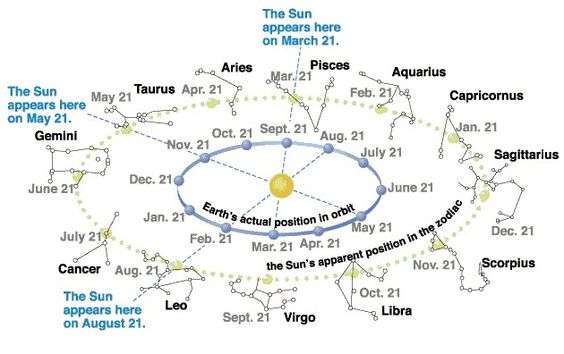
Astrology, deeply ingrained in Indian culture, involves intricate calculations. To ensure accuracy, the moon’s slightly off-path from the sun is divided into 27 ‘nakshatras,’ while the sun’s path is divided into 12 ‘rashis.’
Makar Sankranti’s Solar Affiliation:
Makar Sankranti uniquely adheres to the solar calendar, earning it the alternate name “Uttarayan.” This festival marks the day the sun begins its northward journey, which is crucial in understanding seasonal changes.

Solar Calendar Complexity:
The solar calendar, despite its seemingly rigid structure, incorporates subtle corrections. The 0.25 discrepancy at the end of 365 results in a 0.006363004 overcompensation in leap years. To rectify this, leap years omit February 29 in years ending with ’00,’ maintaining calendar stability.
Mapping the sun’s movement
The sun’s journey through ‘rashis’ corresponds to its directional movement. Celebrating Makar Sankranti on January 14 signifies the sun’s entry into the Makara Rashi. However, the Earth’s axial drift complicates the alignment, leading to historical adjustments.
Historical Drift and Aryabhata’s Time:
Over centuries, the Earth’s axis has drifted slightly in alignment with the sun. While the winter solstice consistently occurs on December 21, the alignment with the Makara Rashi has shifted. Aryabhata, the ancient Indian astronomer, celebrated the coinciding of Uttarayan and Makar Sankranti about 1,500 years ago.Deciding What to Celebrate:
The historical drift prompts contemplation on what to celebrate: Uttarayan or Makar Sankranti? December 21 aligns with Uttarayan, while January 14 aligns with Makar Sankranti. Understanding this historical shift adds depth to the celebration, allowing for varied perspectives.

Conclusion:
Makar Sankranti unfolds as a celestial dance, weaving together the intricacies of lunar and solar calendars, historical adjustments, and the Earth’s axial drift. As we celebrate this festival on January 14, let us marvel at the celestial precision and historical richness embedded in the fabric of Makar Sankranti.
